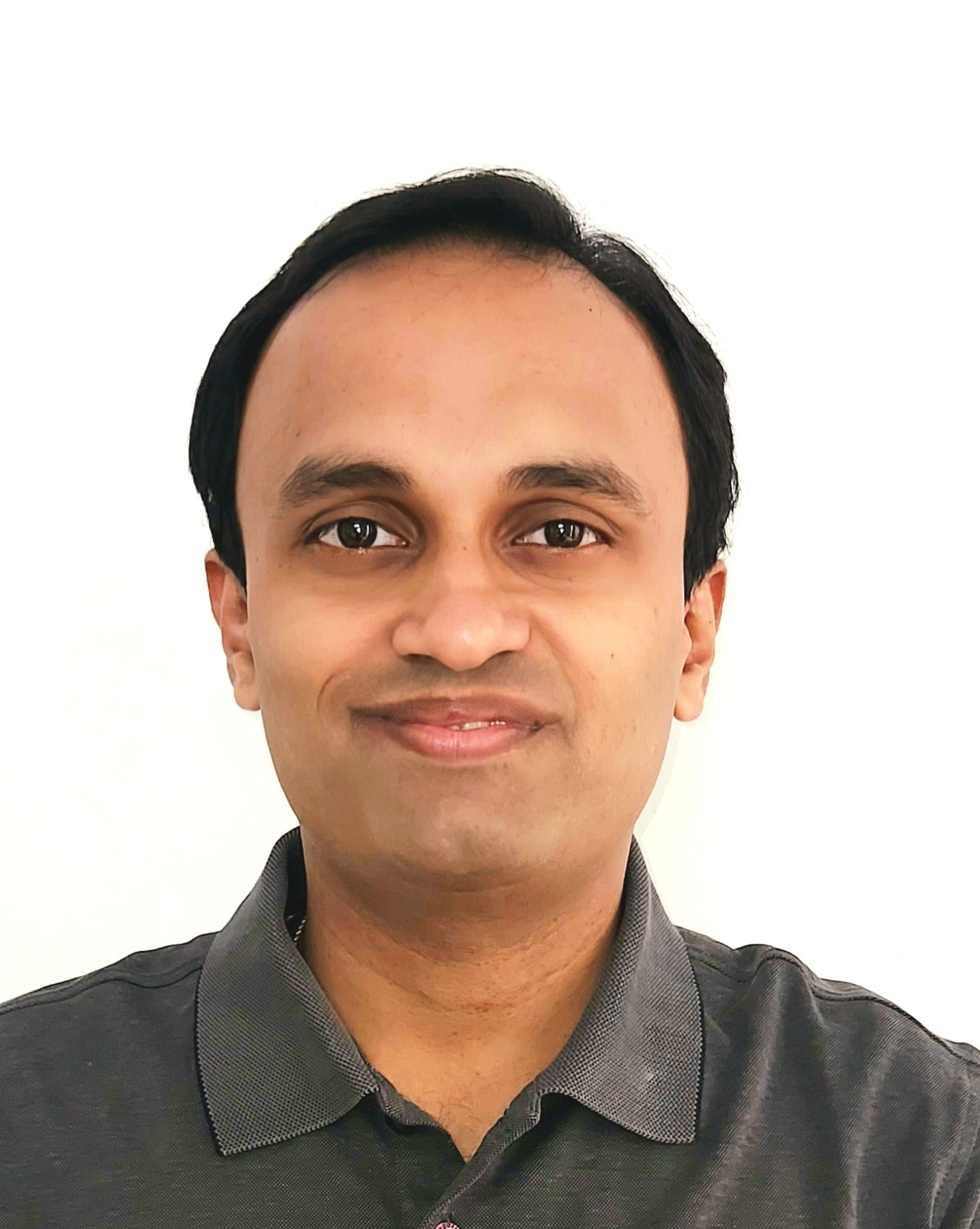
Dr. Saurabh Shigwan

Dr. Saurabh Shigwan

Assistant Professor, Computer Science & Engineering

Shiv Nadar Institute of Eminence (Deemed to be University), Greater Noida

I work at the intersection of medical image analysis and deep learning. My group develops learning-based methods for reconstructing diffusion tensor imaging (DTI) from sparse diffusion MRI, sparse-view CT reconstruction, unsupervised segmentation with graph neural networks (GNNs), and open-set recognition for medical imaging. Before joining Shiv Nadar IoE, I was a pre-doctoral fellow at the Psychiatry Neuroimaging Laboratory, Harvard Medical School, and completed my Ph.D. at IIT Bombay.

Prospective students: I welcome motivated Ph.D., M.Tech., and B.Tech. students interested in medical imaging, deep learning, and computer vision. See the Research Group section, then reach out by email.

About

Education

2014 – 2020

Ph.D., Medical Image Processing

Indian Institute of Technology Bombay (IIT Bombay)

Thesis: “Hierarchical Pointset-Based Statistical Shape Modeling and Applications.” Advisor: Prof. Suyash P. Awate.

Thesis (PDF) · Defense slides

2012 – 2014

M.Tech., Computer Science

Indian Statistical Institute (ISI), Kolkata

2007 – 2011

B.E., Computer Engineering

University of Mumbai

Experience

2021 – present

Assistant Professor

Dept. of Computer Science & Engineering, Shiv Nadar Institute of Eminence, Greater Noida

2019 – 2020

Pre-doctoral Fellow

Psychiatry Neuroimaging Laboratory (PNL), Harvard Medical School, Boston, USA

2014 – 2020

Ph.D. Candidate

Dept. of Computer Science & Engineering, IIT Bombay

Funding & Grants

2026 – present · INR 41 Lakh

Underwater Video Restoration and 3D Reconstruction for Marine Ecological Conservation

The Habitat Trust (India). Role: Co-PI (PI: Dr. Sumit Shekhar).

Pre-doctoral fellowship · USD 16,000

Brain Tractography using Diffusion MRI

Brigham and Women's Hospital, Boston, USA. Role: Pre-doctoral Fellow (PI: Prof. Yogesh Rathi).

Research Interests

Sparse Diffusion MRI Reconstruction & Tractography

We reconstruct high-quality brain connectivity from sparsely sampled diffusion-weighted imaging (DWI) using deep learning. Conventional dMRI needs dense sampling across many diffusion directions, which is slow and often impractical in the clinic. Our methods, including SwinDTI and ARMA-filter graph networks, cut scan time substantially while preserving accuracy, and support the early diagnosis of Alzheimer's disease and frontotemporal dementia.

Unsupervised Image Segmentation with Graph Neural Networks

We segment images without pixel-level labels by exploiting the structure of Graph Neural Networks (GNNs). Our models UnSegMedGAT and UnSeGArmaNet build a graph over image superpixels and are driven by a modularity-based loss that discovers coherent, semantically meaningful regions, generalising across medical scans and natural-image benchmarks where annotations are scarce or costly.

Open-Set Recognition & Uncertainty in Medical Imaging

Clinical models must recognise when an input falls outside their training distribution. We develop uncertainty-aware, open-set classifiers, such as UCDSC, a deep simplex classifier for medical image datasets, so that models can flag unknown classes reliably rather than making confident but wrong predictions.

Current Projects

Neurodegenerative Dementia Classification from Sparse Diffusion MRI

ARMA-convolutional graph neural networks (ARMARRecon) for classifying neurodegenerative dementias from sparse diffusion measures. Collaborator: Dr. Nitin Kumar (SNIOE). Students: Tejaswi Abburi, Ananya Singhal.

Open-Set Recognition for Medical Images and Computer Vision

Uncertainty-aware open-set classifiers (UCDSC) that reject out-of-distribution inputs. Collaborator: Dr. Nitin Kumar (SNIOE). Students: Arnav Aditya, Vishal Chaudhari.

Sparse-View CT Reconstruction and Efficient Segmentation

Geometry-aware deep networks for sparse-view CT reconstruction, and computationally efficient residual U-Nets for spine CT segmentation (SpineContextResUNet). Students: K. Nithurshen, Apaar Raina, Siddharth Reddy.

Underwater Video Restoration and 3D Reconstruction

3D reconstruction from noise-prone video for marine ecological conservation, funded by The Habitat Trust. Co-PI with Dr. Sumit Shekhar (SNIOE). Student: Diksha Dhillon.

Research Group

My students are central to the group's work. Below are the doctoral and undergraduate researchers I supervise or have supervised, along with the peer-reviewed publications their research has produced. I am actively looking for new students, see the note at the end of this section.

Current Ph.D. Students

Tejaswi Abburi

Ph.D. · Since 2024 · Co-supervised with Dr. Nitin Kumar

Unsupervised Representation Learning along with downstream tasks.

va797@snu.edu.in

Published · ISBI 2026

Vishal Chaudhari

Ph.D. · Since 2024 · Sole supervisor

Applications of open-set recognition in medical imaging.

vi921@snu.edu.in

Diksha Dhillon

Ph.D. · Since 2025 · Co-supervised with Dr. Sumit Shekhar

3D reconstruction from noise-prone video sequences.

dd968@snu.edu.in

Ph.D. Graduated

Abhishek Tiwari

Ph.D. · 2021 – 2024 · Co-supervised with Dr. Rajeev Kumar Singh

Deep-learning framework for DTI-parameter estimation and analysis from sparse diffusion MRI. His work produced the group's core diffusion-MRI results, including SwinDTI, clinical validation studies, and applications to Alzheimer's and frontotemporal-dementia diagnosis.

at326@snu.edu.in

Selected publications

  • SwinDTI — Neural Computing and Applications (Springer), 2023
  • Validation of DL for diffusion-MRI quality augmentation — NeuroImage: Clinical (Elsevier)
  • Early diagnosis of Alzheimer's — ACML 2023; Frontotemporal dementia — ICCV-W 2023
  • Tract-specific biomarker discovery for early Alzheimer's — PReMI 2025

Undergraduate (B.Tech.) Researchers

Undergraduate research in the group regularly leads to peer-reviewed publications at venues such as WACV, BMVC, ISBI, ACML, CBMS, and ICCV workshops. Students who contributed to published work are marked Published.

Apaar Raina

B.Tech. · 2026

Sparse-view CT reconstruction.

K. Nithurshen

B.Tech. · 2026

Computationally efficient segmentation (SpineContextResUNet).

Published · CBMS 2026

Arnav Aditya

B.Tech. · 2026

Open-set recognition in computer vision (UCDSC).

Published · WACV 2026

Mudit Adityaja

B.Tech. · 2025

Unsupervised medical image segmentation (UnSegMedGAT, UnSeGArmaNet).

Published · ISBI 2025, BMVC 2024

Kovvuri Sai Gopal Reddy

B.Tech. · 2024

Image segmentation using graph neural networks (UnSeGArmaNet).

Published · BMVC 2024

Bodduluri Saran

B.Tech. · 2024

Image segmentation using graph neural networks (UnSeGArmaNet).

Published · BMVC 2024

Ananya Singhal

B.Tech. · 2023

DTI-parameter estimation from sparse diffusion-MRI measurements.

Published · ISBI 2026, ACML 2023, ICCV-W 2023

Siddharth Reddy

B.Tech. · 2023

Sparse-view CT reconstruction.

Interested in joining the group?

I supervise Ph.D., M.Tech., and B.Tech. research in medical image analysis, deep learning, and computer vision. A strong background in machine learning, linear algebra, and Python is helpful. If our work interests you, email me a short note about your background and interests along with your CV.

Get in touch

Publications

SwinDTI: Swin Transformer-based Generalized Fast Estimation of Diffusion Tensor Parameters from Sparse Data

A. Tiwari, R. K. Singh, S. J. Shigwan. Neural Computing and Applications, Springer, 2023.

Validation of Deep Learning Techniques for Quality Augmentation in Diffusion MRI for Clinical Studies

A. Tiwari, S. J. Shigwan, R. K. Singh, et al. NeuroImage: Clinical, Elsevier, 2023 (Q1, Impact Factor 4.2).

ARMARRecon: An ARMA Convolutional Filter-based Graph Neural Network for Neurodegenerative Dementias Classification

V. T. Abburi, A. Singhal, S. J. Shigwan, N. Kumar. 23rd IEEE International Symposium on Biomedical Imaging (ISBI), 2026.

UCDSC: Open-Set Uncertainty-Aware Deep Simplex Classifier for Medical Image Datasets

A. Aditya, N. Kumar, S. J. Shigwan. IEEE/CVF Winter Conference on Applications of Computer Vision (WACV), 2026.

SpineContextResUNet: A Computationally Efficient Residual UNet for Spine CT Segmentation

K. Nithurshen, S. J. Shigwan. IEEE International Symposium on Computer-Based Medical Systems (CBMS), Limassol, Cyprus, 2026.

UnSegMedGAT: Unsupervised Medical Image Segmentation using Graph Attention Networks Clustering

A. M. Adityaja, S. J. Shigwan, N. Kumar. 22nd IEEE International Symposium on Biomedical Imaging (ISBI), 2025.

Tract-Specific Biomarker Discovery for Early Alzheimer's Disease using Sparse Diffusion MRI and an AI Framework

A. Tiwari, S. J. Shigwan. International Conference on Pattern Recognition and Machine Intelligence (PReMI), Delhi, India, 2025, pp. 369–379.

Multi-Feature Graph Convolution Network for Hindi OCR Verification

S. Dubey, S. K. Behera, K. Mittal, M. Ravikiran, N. Kumar, S. J. Shigwan, R. Saluja. Workshop on Benchmarks, Harmonization, Annotation, and Standardization for Human-Centric AI in Indian Languages (BHASHA), 2025.

UnSeGArmaNet: Unsupervised Image Segmentation using Graph Neural Networks with Convolutional ARMA Filters

K. S. G. Reddy, B. Saran, A. M. Adityaja, S. J. Shigwan, N. Kumar, S. Mukharjee. 35th British Machine Vision Conference (BMVC), 2024.

Early Diagnosis of Alzheimer through Swin-Transformer-Based Deep Learning Framework using Sparse Diffusion Measures

A. Tiwari, A. Singhal, S. J. Shigwan, R. K. Singh. 15th Asian Conference on Machine Learning (ACML), 2023.

Collaborations

Our research is carried out with collaborators at Shiv Nadar Institute of Eminence and partner institutions in India and abroad.

Institutional Partners

Harvard Medical School

Psychiatry Neuroimaging Laboratory — diffusion-MRI reconstruction and tractography.

Brigham and Women's Hospital

Boston, USA — brain tractography using diffusion MRI (pre-doctoral fellowship).

IIT Bombay

Statistical shape analysis and Riemannian modelling (doctoral collaboration).

Academic Collaborators

Prof. Suyash P. Awate

IIT Bombay

Statistical shape analysis, Riemannian modelling (doctoral advisor).

Prof. Yogesh Rathi

Brigham and Women's Hospital / Harvard Medical School

Brain tractography from diffusion MRI.

Prof. Sylvain Bouix

Psychiatry Neuroimaging Laboratory, Harvard Medical School

Neuroimaging and shape analysis.

Prof. Rajeev Kumar Singh

Shiv Nadar IoE

Sparse diffusion MRI, DTI estimation, clinical validation.

Dr. Nitin Kumar

Shiv Nadar IoE

Graph neural networks, unsupervised segmentation, open-set recognition.

Dr. Sumit Shekhar

Shiv Nadar IoE

CT/sinogram reconstruction, 3D reconstruction, image restoration.

Dr. Snehasis Mukharjee

Shiv Nadar IoE

Computer vision, image segmentation.

Dr. Rohit Saluja

IIT Mandi, BharatGen

Document analysis and OCR for Indian languages.

Teaching

Courses Taught

Course Level Years
Advanced Computer Vision Undergraduate 2026 – present
Data Structures and Algorithms Undergraduate 2025 – present
Introduction to Deep Learning Undergraduate 2024 – 2025
Digital Image Processing Undergraduate 2022 – 2025
Introduction to Probability and Statistics Undergraduate 2021 – 2023

Student Advising

Current Ph.D. Students

  • Tejaswi Abburi (since 2024, co-supervised) — unsupervised crossing-fiber detection in multi-shell diffusion MRI.
  • Vishal Chaudhari (since 2024) — applications of open-set recognition in medical imaging.
  • Diksha Dhillon (since 2025, co-supervised) — 3D reconstruction from noise-prone video sequences.

Ph.D. Graduated

  • Abhishek Tiwari (2024, co-supervised) — deep-learning framework for DTI-parameter estimation from sparse diffusion MRI.

Full profiles, undergraduate researchers, and published work are listed in the Research Group section.

Contact

Get in Touch

Office

Room C219F, C-Block
Department of Computer Science & Engineering
Shiv Nadar Institute of Eminence (Deemed to be University)
NH91, Tehsil Dadri
Gautam Buddha Nagar, UP‑201314, India

Office Hours

Monday, 3:00 PM – 5:00 PM
Wednesday, 3:00 PM – 5:00 PM
Or by appointment

Connect

Interested in joining the group?

I am looking for motivated Ph.D., M.Tech., and B.Tech. students to work on medical image analysis, deep learning, and computer vision. A solid grounding in machine learning, linear algebra, and Python is helpful.

Email me a brief note about your background and research interests, along with your CV, and mention a paper or project of ours that caught your attention.

Email Me